

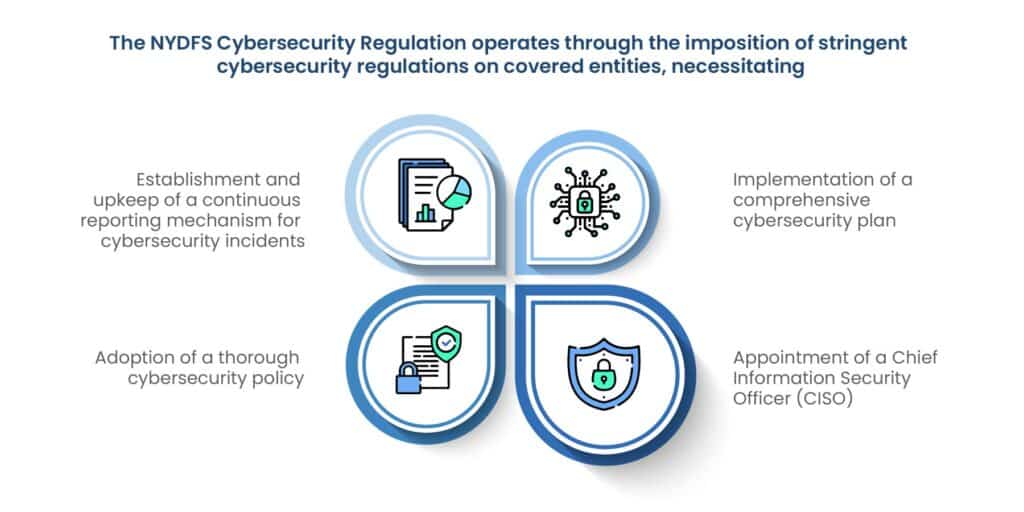
Financial services cybersecurity laws are now crucial for safeguarding customer data, financial institutions, and the general stability of international markets in today’s linked digital economy. Regulators and business executives continuously update frameworks to make sure that financial institutions are robust as cyber threats become more complex and widespread. This comprehensive essay examines the state of cybersecurity laws pertaining to financial services, explains their goals, identifies new trends, and offers professional advice for successful compliance.
1. What Are Cybersecurity Regulations for Financial Services?
Fundamentally, cybersecurity regulations pertaining to financial services refer to the legal and regulatory requirements that control how financial institutions defend data, critical infrastructure, and information technology (IT) systems against cyberattacks. These rules are intended to improve market transparency, encourage risk management, and establish minimal security requirements.
Financial services cybersecurity regulations encompass a wide range of criteria, such as risk assessments, reporting requirements, access control, encryption standards, incident response protocols, and vendor oversight, rather than a single statute or regulation. Crucially, laws pertaining to financial cybersecurity are designed to address the unique threats that banks, payment processors, insurers, investment firms, and fintech businesses encounter.
2. The Need for Strict Cybersecurity Laws in Financial Services
Because financial data and assets are so valuable, the financial sector is one of the most often targeted industries by cybercriminals. In the absence of strict financial services cybersecurity laws, companies could:
- Experience data breaches that result in the exposure of client data.
- Ransomware or system failures may cause operational disruption.
- Penalties for non-compliance will be imposed by regulations.
- lose the confidence of the people and harm their image.
These factors make cybersecurity rules for financial services a high priority for authorities worldwide. These frameworks support national and international financial institutions, establish uniform security standards, and match industry practices with changing threats.
3. Important International Frameworks Influencing Financial Cybersecurity Laws
The creation and implementation of cybersecurity regulations pertaining to financial services are informed by a number of noteworthy frameworks and standards, even though individual restrictions differ depending on the jurisdiction:
a. Governance and Risk Management
Risk management is at the core of all financial services cybersecurity rules. It is expected of organizations to set up governance frameworks that:
- Determine the risks to cybersecurity across all business lines.
- Include cybersecurity in risk frameworks for businesses.
- Clearly define who is responsible for security results.
Leadership involvement in cybersecurity strategy is ensured by the explicit oversight of financial cybersecurity regulations by boards and senior executives in various frameworks.
b. Requirements for Reporting Incidents
Mandatory reporting of cyber events is a prevalent feature of cybersecurity rules pertaining to financial services. When a breach occurs, regulators mandate that institutions alert authorities and occasionally customers. Reporting must be accurate and timely in order to minimize harm and facilitate systemic response.
c. Vendor and Third-Party Risk Management
For services like cloud computing, payment processing, and data analytics, financial institutions frequently depend on outside providers. But these links increase exposure to risk. Because of this, financial services cybersecurity regulations increasingly require thorough vendor risk evaluations, contract clauses, and ongoing monitoring.
d. Encryption and Data Protection
Regulations pertaining to financial cybersecurity must prioritize protecting the privacy of consumer data. Frameworks frequently contain specifications for:
- robust encryption guidelines.
- least-privilege-based access controls.
- Data flows are continuously observed.
Financial services cybersecurity legislation assist organizations in preventing unwanted access and data loss by regulating data security procedures.
e. Audits and Testing for Cybersecurity
Many cybersecurity laws and financial services frameworks need to be tested, audited, and validated on a regular basis to guarantee efficacy. These could consist of:
- searching for vulnerabilities.
- testing for penetration.
- cybersecurity checks by third parties.
Testing verifies if an organization satisfies the requirements outlined in financial cybersecurity laws.
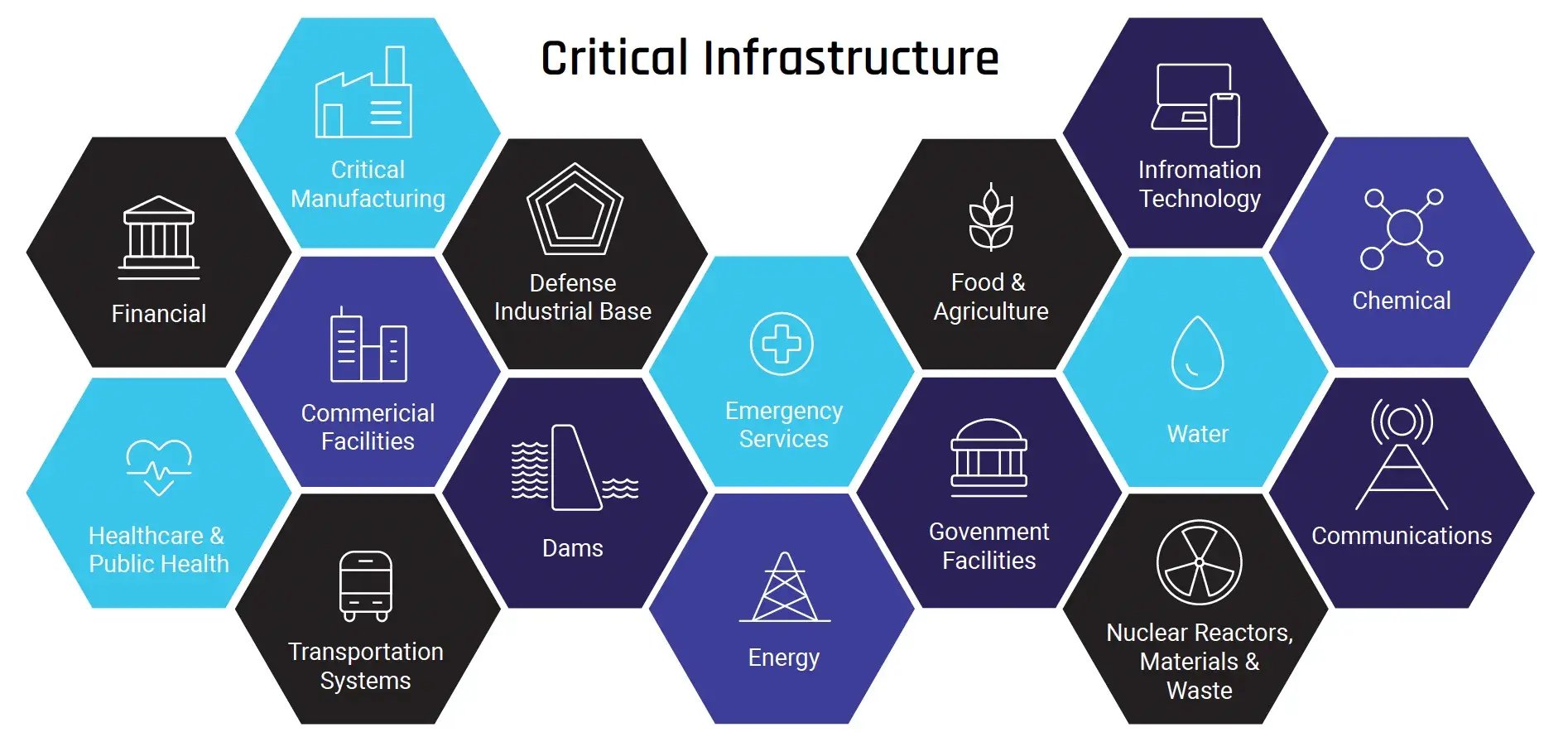
4. Regional Focus: The Various Markets’ Approaches to Cybersecurity Laws
Regulations pertaining to cybersecurity in financial services are approached differently by various nations and areas. Here are a few instances of the differences between frameworks.
a. The US
A number of U.S. agencies, such as banking, securities, and insurance authorities, publish guidelines that are part of the financial services industry’s cybersecurity rules. Risk assessments, reporting guidelines, and resilience expectations are among the prerequisites. State and federal regulations may be in effect at the same time.
b. The EU
Data protection, operational resilience, and reporting criteria are all included within the European Union’s financial cybersecurity legislation. Important elements consist of:
- uniform regulations for financial organizations.
- All member states must disclose breaches.
- significant focus on third-party risk.
c. The Pacific
In recent years, governments around the Asia-Pacific region have expedited the revision of cybersecurity rules pertaining to financial services. Since cyber risks transcend national boundaries, many regulators place a strong emphasis on resilience and cross-border collaboration.
5. Fundamentals of Successful Financial Cybersecurity Laws
The best cybersecurity legislation for financial services have basic concepts that improve compliance and protection, notwithstanding the differences in frameworks.
i. Proportionality
Each institution’s size and risk profile should be taken into account while establishing regulations. Global investment banks and local community lenders, for instance, may have different responsibilities, yet both are subject to financial cybersecurity laws.
ii. Support for Innovation and Flexibility
Strict laws are important, but they can also hinder technological advancement. By permitting the safe deployment of cutting-edge technologies like blockchain, cloud computing, and artificial intelligence (AI), effective cybersecurity policies for financial services achieve a balance.
(iii) Continuous Improvement
Financial services should support ongoing modifications to risk processes in light of cybersecurity rules and the speed at which cyber risks are evolving. This entails not just fulfilling present requirements but also foreseeing potential dangers.
6. Transparency and Reporting on Cybersecurity
The emphasis placed on reporting and openness is among the most significant features of financial cybersecurity rules. This comprises:
- reporting of internal incidents.
- Notification to authorities.
- Public communication in specific situations.
Prompt reporting helps with sector-wide threat intelligence sharing and regulatory oversight. Consequently, this strengthens the collective defense of organizations subject to financial services cybersecurity laws.
7. Boards and Leadership’s Function in Compliance
A common assumption in cybersecurity rules pertaining to financial services is leadership engagement. Executives and board members are frequently expected to:
- Recognize your vulnerability to cyber danger.
- Accept the cybersecurity plan.
- Set aside funds to ensure compliance.
Stronger governance and resilience are displayed by firms when boards give financial cybersecurity requirements top priority.
8. New Developments in Financial Cybersecurity Laws
Regulations pertaining to cybersecurity in financial services are always changing along with cyber threats. Among the major trends are:
A. The importance of operational resilience
In the face of cyberattacks, regulators are paying more attention to operational continuity than just technical security measures. This change acknowledges the need for mission-critical operations to endure attacks and bounce back fast.
B. Development of Cybersecurity Skills
Investing in cybersecurity professional workforce training, certifications, and retention initiatives is increasingly encouraged or mandated by numerous governments. This improves adherence to financial services cybersecurity regulations.
C. Including the Risks of Artificial Intelligence (AI)
Financial cybersecurity laws are growing to include AI-specific risk concerns like data integrity, governance of AI systems, and model weaknesses as AI becomes more integrated into financial operations.
D. Adoption of Regulatory Technology
RegTech products, or technologies that facilitate compliance, are growing in popularity. These technologies assist businesses in managing third-party risks, automating reporting, and complying with financial cybersecurity rules.
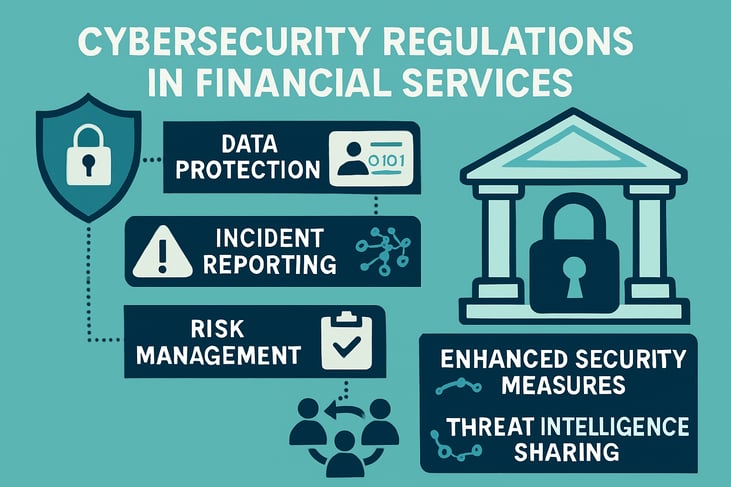
9. Difficulties in Putting Cybersecurity Laws into Practice in Financial Services
Organizations frequently have challenges in adhering to cybersecurity requirements in the financial services industry, despite the obvious advantages:
1. A complicated regulatory environment
Overlapping regulations result from many regulators. In order to prevent duplicating requirements under financial cybersecurity legislation, coordination is crucial.
2. Limitations on Resources
Smaller organizations might not have the resources or internal knowledge necessary to completely satisfy regulatory requirements. For them, implementing scalable solutions and giving risk management top priority are essential.
3. Quickly Changing Dangers
Cyber risks evolve more quickly than changes in regulations. In order to develop adaptive defense capabilities that are in line with financial services cybersecurity rules, organizations must move beyond compliance.
10. Doable Actions to Increase Compliance
Here are some doable tactics to help you comply with financial cybersecurity laws, regardless of whether you’re a big bank or a fintech startup:
Perform Frequent Risk Evaluations
The cornerstone of adhering to financial services cybersecurity rules is risk identification and prioritization.
✔ Create Robust Governance
Make sure boards and senior leadership participate in cybersecurity planning and supervision.
✏ Keep Precise Records
During audits and reviews, documentation of policies, incidents, and controls shows adherence to cybersecurity standards for financial services.
Execute Training Initiatives
Employees that receive ongoing training are less likely to make mistakes and are more likely to follow financial cybersecurity laws.
Utilize technological tools.
Robust defensive ecosystems are supported by threat intelligence, automated compliance monitoring, and security information and event management (SIEM).
11. Conclusion
Financial services cybersecurity standards are more important than ever in a digital world when cyberattacks are a daily occurrence. By encouraging organized risk management, incident reporting, data protection, and resilience, these regulatory frameworks safeguard organizations, clients, and markets.
More than just following a checklist is necessary for compliance success; a culture of cybersecurity commitment that harmonizes corporate strategy with legal requirements is also necessary. The standards that will determine the direction of safe financial services in the future will change along with the dangers.